
How Wildfire, Climate Change, and Invasive Species Are Reshaping Canada’s Ecosystems
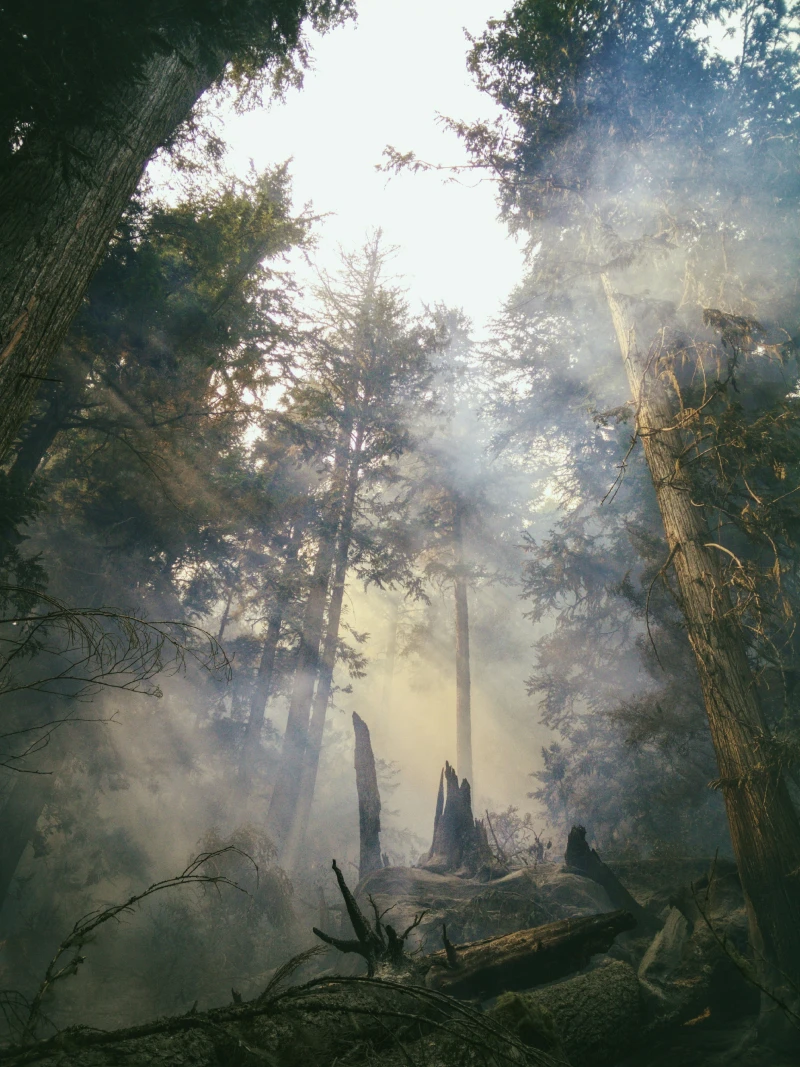
What happens when three powerful environmental forces – fire, climate and biological invasions – collide?
These global change stressors are not independent problems; they interact in complex ways that challenge land managers and fire suppression efforts. Climate Change promotes the conditions that wildfires thrive under, increasing their intensity and frequency. Invasive species are fueling these fires and taking advantage of the disturbed landscapes they leave behind.
At the 2024 Wildfires, Climate Change and Invasive Species conference, hosted virtually by the Canadian Council on Invasive Species on November 19th, 2024, experts explored how climate change is reshaping wildfire patterns, forest resilience, and invasive species dynamics across Canada’s ecosystems. The discussion highlighted emerging threats, synergistic impacts, and urgent management strategies for addressing this growing crisis.
Wildfires in a Changing Climate
It is well documented that wildfires are only getting worse in Canada. The average area burned in Canada in the past decade has quadrupled since the 1970s. What’s behind this disconcerting trend? Dr. Mike Flanagan, Research Chair at Thompson Rivers University, says “We’re creating our own mess,” emphasizing that human-caused climate change is a major driver behind the increase in extreme wildfires.
These changes in wildfire regime will be more pronounced in Canada. Warming in Canada due to climate change is happening at twice the rate compared to the rest of the world, and Canada’s northern regions are warming even faster. This accelerated warming, coupled with a climate-driven increase in wildfires, are reshaping Canada’s forests.
“The fire regime is changing, and some forests may not come back,” cautions Dr. Ellen Whitman, a forest fire research scientist at Natural Resources Canada. The combination of more frequent and intense fires, shifting temperatures, and invasion by non-native species is pushing ecosystems toward irreversible transformations.
Impacts of Climate Change and Fire on Canada’s Boreal Forest
Fires are natural. Tree species in Canada’s boreal forest have survived and adapted to Canada’s historic wildfire regime. For example, black spruce and Jack pine have evolved serotinous cones, which means they are coated in a waxy layer that only opens and grow after exposure to fire. In the past, fires in these conifer forests have removed adult trees, opened the forest floor to sunlight, and created the conditions for the next generation of conifers to grow. Adaptations to fire, like serotiny, make boreal forests resilient to disturbance by wildfires. However, “there is a limit to that resilience”, says Whitman.
Regeneration shortly after a fire recreates the forest composition that existed before – pine forests create pine forest. For this cycle to continue, it is necessary that the new growth has enough time to mature, so that resilient traits like serotiny can develop.
“If that forest burns again in that very short interval, there hasn’t been enough time for those young trees to mature… when that happens, there’s sort of a lower proportion of serotiny generally in our young trees. And we’ve overcome that resilient response.”
Over time, experts like Whitman have observed a shift in Canada’s boreal forest from mostly coniferous to more mixed broadleaf forests, that are less resilient to fires and invasion by non-native species.
Disrupting the Cycle
Accelerated warming in Canada’s north due to climate change, produce longer fire seasons, stronger winds, drier fuels and increased ignition events (lightning). The result is more severe and frequent wildfires that create more opportunity for non-native species to invade and take hold, adding fuel to future fires. This dangerous feedback loop, if left unchecked, could lead to long-term ecosystem shifts, where native boreal forests struggle to regenerate, and fire-prone invasive plants take over.
Fire management is becoming increasingly complex and will only become more challenging in the years ahead. While Canada has some of the most advanced fire management strategies in the world, experts agree that tackling wildfires and invasive species together is essential to breaking the destructive cycle. Public education and management strategies, such as fire bans, have already played a crucial role in reducing the number of human-caused fires across the country. However, as climate change accelerates and invasive species continue to spread, a proactive and collaborative approach will be crucial to safeguarding Canada’s forests for future generations.